
Features
What does C-SPAN keep in its speech archive and why?
The C-SPAN speech archive holds decades of political speeches, hearings and campaign events, indexed by speaker, date and topic, with PBS collections alongside it.
What to take away
- The C-SPAN speech archive is a video-first record of American political speeches, hearings, campaign events and press briefings, kept largely as aired rather than edited down.
- C-SPAN indexes its material by speaker, date, event type and subject tags, which is what makes a 1980s floor speech findable today.
- PBS holds its own political speeches through series like American Experience and NewsHour, plus transcripts and teacher guides.
- Both archives are free to search, but they differ in what they hold: C-SPAN has the raw gavel-to-gavel footage, PBS has the produced documentary and the transcript.
- Citation practice differs by archive. C-SPAN items are cited by program and date, PBS by series, episode and transcript page.
- Neither archive is a complete record of American political speech. Presidential papers sit with the National Archives, and official proclamations run in the Federal Register.
What C-SPAN keeps in its speech archive
C-SPAN began cablecasting the U.S. House of Representatives in 1979. The network has recorded continuously since then, and that continuous record is the core of its archive. The collection is not a highlights reel.
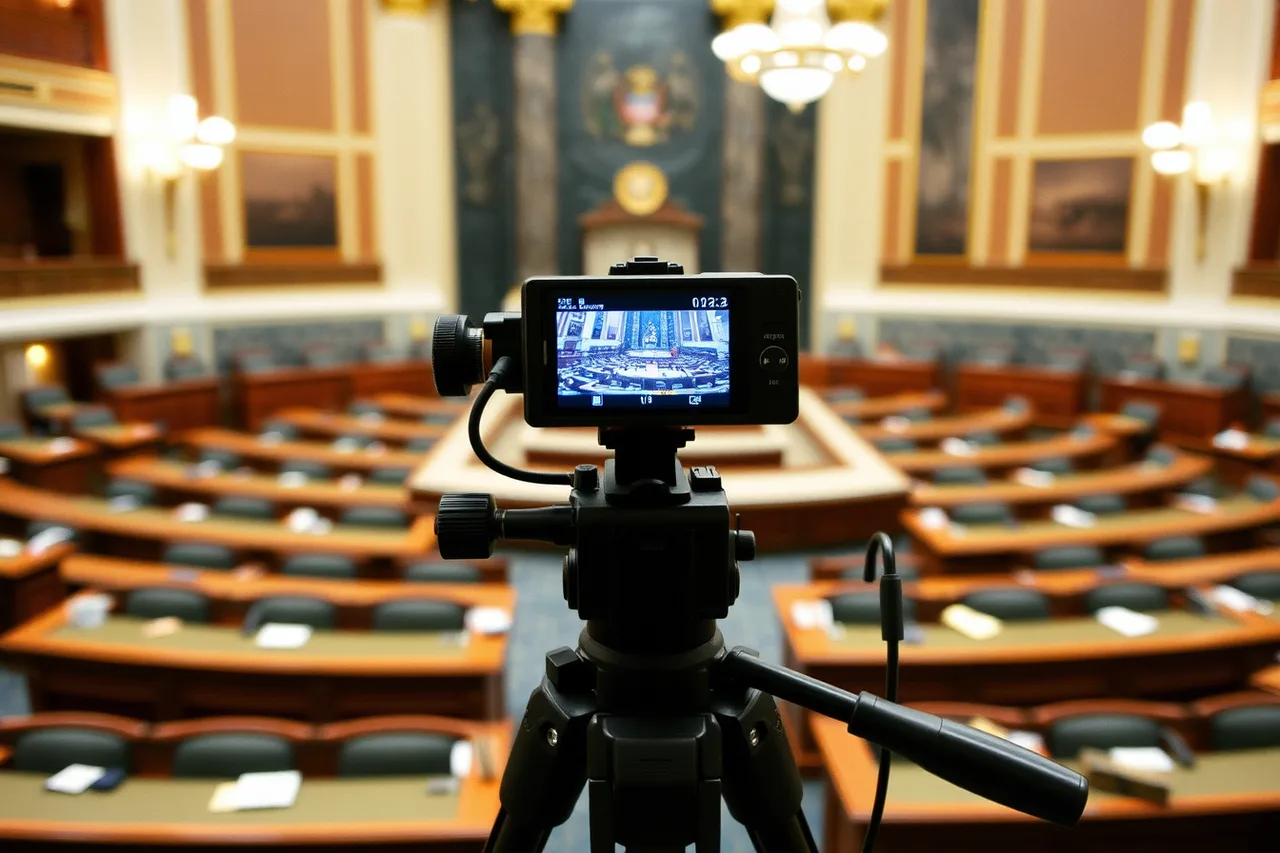
It is closer to a public log of what was said on the record, in the chamber, in committee rooms, at the podium and on the campaign trail.
The main bodies of material are easy to list. Floor proceedings of the House and Senate. Committee hearings and markups. Presidential addresses, press conferences and bill signings. Campaign events, debates and party conventions. Think tank panels, book talks and policy conferences in Washington, D.C. Call-in programs where elected officials take questions from constituents.
What makes the collection unusual is the raw feed. A three-hour hearing stays three hours. A member speaking to an empty chamber at 11 p.m. is still in the record. Researchers value this because the archive captures the unscripted moment, the procedural vote, the exchange that never reaches a news clip.
Speech coverage is national in scope. You will find events from Massachusetts town halls, Virginia shipyard remarks, Georgia church addresses, Illinois budget hearings, California tech policy forums and New York campaign stops. The network follows the federal calendar, so Washington, D.C. dominates, but state and district events appear whenever a member or candidate is on camera.
C-SPAN also keeps material that is not a speech at all but matters to speech research: the introduction, the podium setup, the question and answer session, the press availability afterward. For anyone studying how a speech was received, that surrounding footage is often more useful than the text.
Coverage is not evenly distributed. Major addresses and campaign debates are archived completely. Routine committee work is archived completely. Smaller events, especially those held off camera or without network coverage, may exist only as a transcript or not at all.
How C-SPAN organizes and indexes political speeches
C-SPAN indexing is the reason the archive is usable. Every program gets a record with a title, air date, network (C-SPAN, C-SPAN2 or C-SPAN3), duration and a short description. From there, the archive adds structured fields that let a researcher filter rather than guess.
The main fields are speaker name, organizational affiliation, event type and subject tag. A single hearing may carry dozens of tags: the committee, the bill, the agencies involved, the witnesses, the topics raised. Tags are what let you pull every appearance by one senator across twenty years, or every discussion of a single bill from introduction to signing.
Search supports several entry points. You can search by keyword across titles and descriptions. You can browse by date. You can filter by series, such as Washington Journal or America and the Courts. You can also jump to a specific moment using the program's timeline, which maps speaker segments to timecodes.
That timecode layer is the practical tool most researchers use. Instead of watching a two-hour program, you open the transcript or the segment list, find the speaker, and go straight to the minute. Clips can be shared with a timestamp, which is how C-SPAN material circulates in classrooms and newsrooms.
Indexing has limits worth knowing. Early records are thinner than recent ones. Tagging vocabulary has changed over the decades, so a subject searched under one phrase may sit under another in older material. Speaker names are normalized inconsistently across very old programs. A careful search uses several terms and checks adjacent dates.
The archive also links outward. Congressional records, committee pages and member websites are often referenced alongside the video. That matters when you want the official text of a statement, not just the delivery. For comparison, see how political speeches you can actually verify are sourced and dated.
PBS speech collections and access tools
PBS approaches political speeches differently. Where C-SPAN keeps the unedited event, PBS keeps the produced program: the documentary, the news segment, the historical series. The two are complements, and researchers who use only one miss half the record.
American Experience is the flagship history series and holds many of the most-cited political addresses in American broadcasting, presented with context, archival footage and interviews. Programs on presidents, civil rights leaders and major legislative fights typically include extended speech excerpts and often full transcripts.
NewsHour and its predecessor programs carry contemporary political speeches, convention coverage, State of the Union analysis and candidate interviews. The accompanying transcripts are searchable and are frequently cited by researchers who need a quotable line with a broadcast date.
PBS also maintains education-facing tools. Lesson plans, discussion questions and clip collections are organized by topic and grade band, and many are built around a single speech. For teachers, this is often the fastest route from a speech to a classroom-ready activity.
Local PBS stations add a layer the national archive cannot. Station archives hold state legislative debates, gubernatorial addresses and local civic events that never reach the national feed. Coverage varies widely by station and by decade, and some stations have digitized far more than others.
The National Archives and Records Administration holds the official presidential record, including speeches and addresses, separate from any broadcast archive. The Presidential Records | National Archives collection is the place to confirm an official text, and the broader Research Our Records | National Archives portal helps locate related holdings.
Official proclamations and presidential documents also run in the Federal Register :: Presidential Documents, which gives a citable publication date.
Comparing C-SPAN and PBS archives
The two archives answer different questions. C-SPAN answers what was actually said and when, in full, with the procedural context intact. PBS answers what it meant, with editing, narration and historical framing.
C-SPAN is stronger for primary research. If you need the exact exchange, the full hearing, the unedited address or the moment a member yielded the floor, C-SPAN is the source. Its weakness is discoverability in older material and the sheer volume of footage.
PBS is stronger for context and teaching. If you need a twenty-minute segment that explains a speech and places it in history, PBS is faster and better produced. Its weakness is selection: you get what the producers chose to include, not the whole event.
Both are free at the point of use. Neither requires a subscription to search or watch, though some PBS classroom materials sit behind an education account. For a wider look at paid options, including what a paid tier adds over free public archives, see speech archive subscriptions.
Both have gaps. Neither is a legal record. Neither replaces the official text held by the government. Researchers working on federal speeches should treat the broadcast archives as evidence of delivery and the official record as evidence of text.
Coverage also shifts by era. C-SPAN's record begins with cable and thickens over time. PBS's political coverage tracks its own broadcast history. For any speech before the late 1970s, expect to work through transcripts, newsreels and print archives rather than video.
How to search and cite C-SPAN and PBS speeches
A repeatable search process saves hours. The steps below work for both archives and for most political speech research.
- Define the speech precisely. Identify the speaker, the occasion, the approximate date and the venue. A campaign rally and a floor statement by the same person are different records in different collections.
- Search the broadcast archive first. Use the speaker name plus a date range, then add one subject term. If the result set is empty, widen the date range before changing the terms.
- Check the official record. Confirm the text against government sources, including the Branches of the U.S. government | USAGov overview when you need to place the speaker's office correctly in the federal structure.
- Capture the citation details while the page is open. Record the program title, network, air date, timestamp and the URL. For transcripts, record the series and episode.
- Save a stable copy. Download the clip or transcript, or archive the page, because program pages and video players change.
Citation formats differ. For C-SPAN, cite the program title, network, air date and the timestamp of the segment, then the URL. For PBS, cite the series, episode title, broadcast date and transcript page. For government texts, cite the publication and its official date.
A short checklist before you finish:
- Speaker, occasion and venue confirmed
- Broadcast date and timestamp recorded
- Program or series title captured exactly
- Official text checked against the broadcast
- Stable URL or archived copy saved
- Clip length noted if you are quoting a segment
Grouping speeches by era helps when a search stalls. If a term returns nothing, the vocabulary may be the problem, which is why political speeches by decade is a useful way to reset a search.
Short addresses also behave differently in archives. They are often indexed as remarks or statements rather than speeches, and short political speeches are frequently filed under the event rather than the speaker. If you are choosing what to study, best political speeches discusses how rankings and thematic groupings change what gets retrieved.
A table of collection types and access methods
The table below maps the main collection types to where they live and how you get to them. Use it as a routing guide before you start searching.
Collection types and access methods
| Collection type | Primary archive | Access method | Best for |
|---|---|---|---|
| Floor proceedings | C-SPAN | Date browse, series filter | Full debate and procedural context |
| Committee hearings | C-SPAN | Keyword plus committee tag | Witness testimony and questioning |
| Presidential addresses | C-SPAN, National Archives | Program search, official records | Delivery plus official text |
| Campaign events and debates | C-SPAN | Speaker and date search | Unscripted campaign speech |
| Documentary speech segments | PBS | Series browse, transcript search | Context and classroom use |
| News segments and interviews | PBS NewsHour | Transcript search | Quotable lines with broadcast dates |
| Proclamations and official documents | Federal Register | Publication date search | Citable official text |
| Local and state events | Local PBS stations | Station archive browse | Regional coverage |