Features
Award speech season in Los Angeles and how speeches get archived
Los Angeles award speech archives preserve ceremony moments through studios, guilds, and media collections, plus copyright deposit rules anyone can use.
What to take away
- Los Angeles award speech archives are built by three groupsstudios, guilds, and media archives, each with different access rules.
- Award speech season runs from the fall film festivals through the spring ceremonies, and the archiving work follows months behind.
- Copyright deposit and registration rules decide whether a speech text survives in a public collection.
- Most ceremony footage sits in private studio and guild holdings; public access usually means a research request.
- A researcher who knows the ceremony, the year, and the speaker can usually narrow a request to one or two archives.
What is award speech season in Los Angeles
Award speech season is the stretch of the entertainment calendar when Los Angeles fills with ceremonies, nominees, and acceptance speeches. It opens in the fall, when film festivals and early guild screenings start the conversation, and it closes in spring with the televised ceremonies.
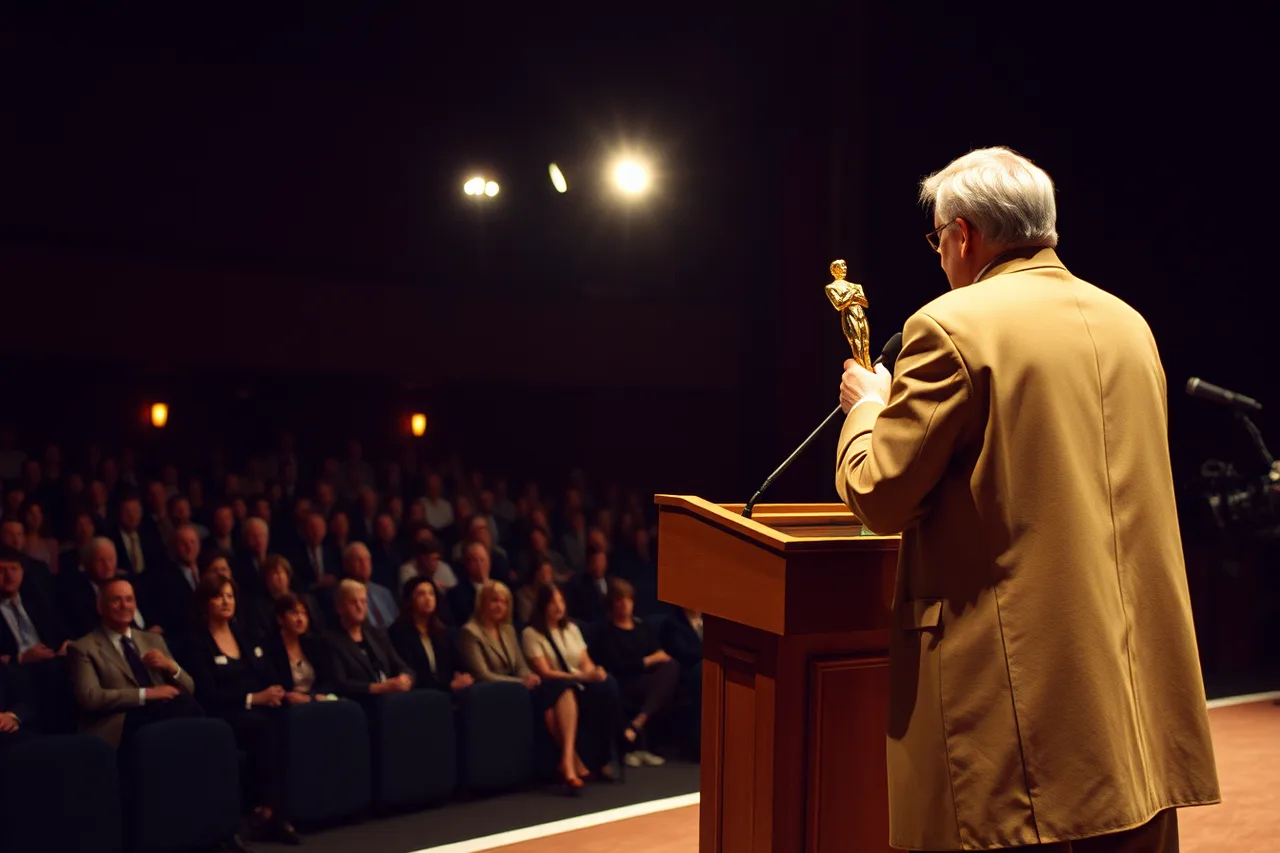
For an archivist, the season is not the red carpet. It is the months after, when transcripts, press releases, and broadcast tapes arrive in batches.
Los Angeles is the center of this work because the industry bodies that hand out the awards are here. The studios that submit the work are here. The crews that shoot and edit the broadcasts are here.
One acceptance speech can survive in five or six versions within a week. The live feed comes from the Dolby Theatre on Hollywood Boulevard, and the press room cut comes from the same building.
An edit suite on the Warner Bros. lot in Burbank makes its own version, while SAG-AFTRA cuts a clip at its Wilshire Boulevard headquarters. A fan recording may add one more.
Sorting them is the first job of best business speeches.
Speeches also change shape by decade, and the pacing of a 1970s acceptance speech reads very differently from a modern one. That shift is the subject of civil rights speeches context.
The season keeps a predictable shape even though the exact dates move each year.
| Month | What happens |
|---|---|
| September | The Primetime Emmy Awards at the Peacock Theater in downtown Los Angeles, plus the start of studio screening campaigns. |
| November | AFI Fest in Hollywood and the Academy's Governors Awards at the Ray Dolby Ballroom. |
| December | Critics groups such as the Los Angeles Film Critics Association vote, and nomination ballots go out. |
| January | The Golden Globes at the Beverly Hilton. |
| February | The Grammy Awards at Crypto.com Arena, the DGA Awards at the Beverly Hilton, and the SAG-AFTRA and Writers Guild ceremonies. |
| March | The Academy Awards at the Dolby Theatre in Hollywood. |
How studios and guilds archive award speeches
Studios keep the deepest holdings. Warner Bros. in Burbank and Sony Pictures in Culver City hold libraries that may include the ceremony broadcast, the raw camera feeds, the nominee's prepared remarks, and the press kit.
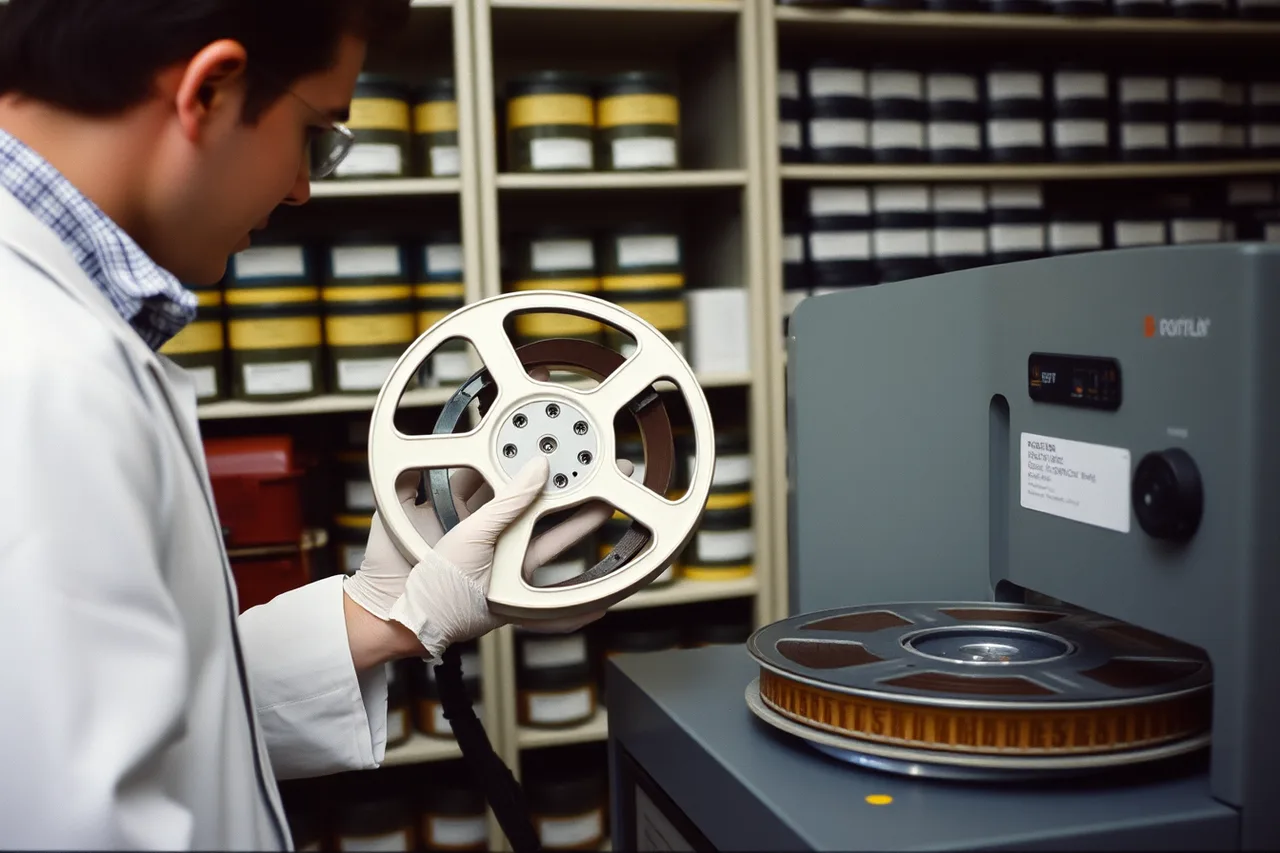
SAG-AFTRA, the Writers Guild of America, and the Academy of Motion Picture Arts and Sciences keep narrower but often more complete records for their own ceremonies. A guild archive typically holds the full ceremony tape, the nominee list, and the written remarks submitted before the event.
Preservation practice varies. Older ceremony tapes held on the Burbank and Culver City lots need transfer before they degrade, and the UCLA Film & Television Archive in Westwood does much of that work for outside clients. Newer ceremonies arrive as digital files, which forces format migration every few years.
Speech texts themselves are literary works, and registration is the category that covers published speech texts under U.S. law. A studio or guild that wants a clear record of a published speech text can register it through the process described for literary works.
Registration is filed under 17 U.S.C. § 408, and the paper form for the literary works category is Form TX.
Registration is not the same as deposit. Federal rules require copies of certain published works to be deposited with the Copyright Office, and those rules are set out under mandatory deposits.
Deposit is a separate duty under 17 U.S.C. § 407. The usual deposit is two copies of the best edition for a work first published in the United States, and one copy for a work first published abroad.
Copyright Office Circular 7d sets out the deadline and the exceptions.
Media archives in Los Angeles
Media archives in Los Angeles sit between the private studio vault and the public library. The UCLA Film & Television Archive in Westwood, the Academy Film Archive in Hollywood, and the Paley Center for Media in Beverly Hills are the collections researchers ask for most. They collect broadcast material, news footage, and ceremony coverage from many sources.
These archives serve journalists, documentary producers, and researchers. Their catalogs are usually searchable by date, program, and speaker.
Television and radio collections are the strongest holdings. A ceremony broadcast that a studio never released can still survive in a station's off-air recording made in Los Angeles.
Rights are the constant obstacle. An archive may hold a tape it cannot let you publish, only view.
Archivists here also fight a quieter problem: misattribution. Clips get trimmed, captions get wrong, and a line lands on the wrong speaker. The speeches most often affected are collected in civil rights speeches misquotes.
Before relying on any clip, confirm the ceremony, the year, and the speaker against a second source. That habit is the core of commencement speeches source check.
Access rules for researchers and the public
Access depends on who holds the material. The table below summarizes what to expect.
Access rules for researchers
| Holder | Typical access | What you can usually get |
|---|---|---|
| Studio archive | By request, commercial review | Viewing copy, clip license |
| Guild collection | Members and approved researchers | Full ceremony tape, nominee records |
| Media archive | Reading room or licensed stream | Broadcast footage, transcripts |
| Public library | Open, some restrictions | Published transcripts, press coverage |
| Copyright Office records | Public search | Registration and deposit records |
Public libraries and federal records are the easiest starting points. Copyright records are fully public, and the Copyright Office publishes copyright circulars that explain the rules writers and producers cite when they publish a speech.
Studio requests take longer. Expect a review of your intended use, and expect a fee for anything beyond private viewing.
Guild collections often require a letter explaining the project. Approval is common for documentary and academic work, rarer for commercial reuse.
Studio archive staff work on the Burbank and Culver City lots, home to Warner Bros. and Sony Pictures. The Margaret Herrick Library in Beverly Hills takes public appointments, and Copyright Office records can be searched from anywhere.
A checklist for finding an archived award speech
Use this sequence when you need a specific speech and you do not know where it lives.
- Identify the ceremony, the year, and the exact category.
- Confirm the speaker's full name and the award presented.
- Check the guild that runs the ceremony for a members' archive.
- Search media archives for the broadcast date and program title.
- Look for a published transcript in trade press or a press kit.
- Check Copyright Office records for a registered speech text.
- Request a viewing copy if the only holding is a studio vault copy.
Work the list in order. Each step narrows the next request, and a precise request is approved faster than a vague one.
If the speech is famous, expect multiple versions and compare them. A short acceptance speech can lose a sentence in editing, and the trimmed version is often the one that circulates.
Case example: archiving a recent award speech
A researcher wants a director's acceptance speech from the Directors Guild of America Awards, which are usually held in February at the Beverly Hilton.
- The researcher notes the ceremony, the year, and the category, then checks the DGA, the guild that runs the awards.
- The guild confirms it holds the full ceremony tape and the director's submitted remarks.
- A check with the Paley Center for Media in Beverly Hills turns up the same broadcast from an off-air recording with clean audio.
- The researcher compares the two versions and finds the online clip is missing one sentence.
- The guild grants a viewing copy; the Paley Center licenses the clean audio for a documentary.
- The speech text is checked against the Copyright Office registration record for the published remarks.
The missing sentence turns out to be the line the director is now known for.
That outcome is typical. Preservation is not just storage; it is the difference between a speech as delivered and a speech as remembered. The pressure of a live ceremony shapes delivery in ways a transcript cannot show, which is why award speeches reward close listening.