Guides
Washington D.C. Archives: Speech Verification Basics
Washington D.C. archives speech verification begins with identifying a speech, comparing its draft, transcript and recording, and documenting any variants.
Washington D.C. archives speech verification starts with identifying the speech and comparing its surviving draft, transcript and recording.
What to take away
- A quotation is verified against the original document, recording or transcript, never against another quotation website.
- The National Archives and Records Administration holds federal speech drafts, transcripts and audiovisual records, split between the National Archives Building in Washington and the College Park, Maryland site.
- The Library of Congress Manuscript Division holds drafts with handwritten edits; its recorded sound division holds the broadcasts that show what an audience actually heard.
- The Congressional Record appears in a daily edition and a bound edition, and members may revise remarks between the two.
- Record the repository, collection, box or folder and item for every quotation you publish, and describe any variant rather than choosing one silently.
Speech verification sequence
- Identify speaker, occasion, venue, date
- Find primary source in archives catalogs
- Compare wording word by word
- Check delivery against recording
- Record full repository citation
- Note variants rather than hiding them
Why a disputed line gets settled here
The National Archives, the Library of Congress and the Smithsonian Institution sit within a few miles of each other. Between them they hold the drafts, the recordings and the printed transcripts that decide whether a quotation is accurate.
A quotation drifts in small ways. A word changes, a clause disappears, a heckler's interruption gets folded into the speaker's text. Each shift can change what the line means.
The same source-first habit applies to speeches delivered in Washington, where the draft, transcript and recording can disagree. For a separate example, see this Canadian throne speech fact check.
The cost of getting it wrong is a correction request, or a misrepresented president, civil rights leader or commencement speaker. Grounding the line in a dated, located source is what prevents both.
The National Archives: reading rooms and research tools
The National Archives and Records Administration keeps federal records, including speech drafts, transcripts and audiovisual materials. The National Archives Building in Washington holds older records; the College Park, Maryland site holds modern ones. Check the list of National Archives locations to see which site holds the record group you need.
Read the guidance on how to plan your research visit before you travel. A researcher card is standard, some materials need advance notice, and knowing the record group and box number saves a wasted trip.
The Getting Started overview explains how records are organized and how to request them. Speech texts sit in presidential libraries, congressional collections or agency files, so the overview tells you where to begin.
Many checks finish before you leave your desk. The Archives publishes online research tools and aids, including finding aids, microfilm catalogs and digitized collections. Use them to confirm a document exists and whether it is available remotely.
The online databases page links to catalogs covering textual records, photographs and recordings. A database hit gives you a citation to verify in a reading room or order as a reproduction.
Reading rooms run on the same pattern everywhere. You register, store personal items, request materials by call slip and review documents under supervision. Staff explain restrictions; they will not interpret a speech for you. Bring your own comparison text and one clear question.
Library of Congress: the draft and the recording
The Library of Congress holds presidential papers, oral histories and the Congressional Record. Three parts of it matter for a quotation check: the Manuscript Division, the Motion Picture, Broadcasting and Recorded Sound Division, and the general collections.
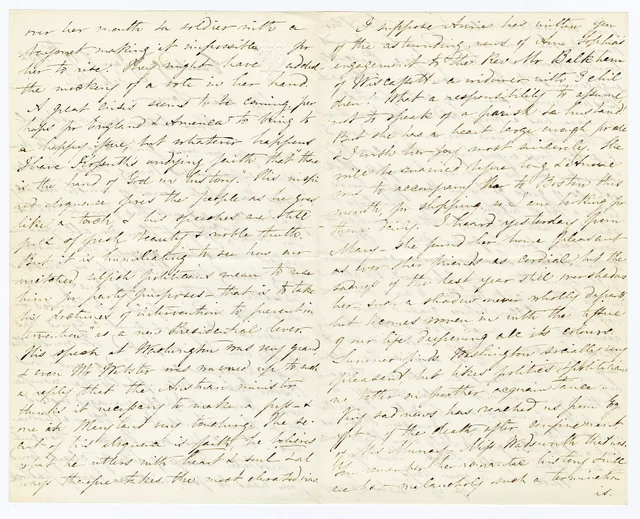
The Manuscript Division holds the papers of presidents, senators and justices. A draft with handwritten edits shows what a speaker intended against what was delivered, which is often why two published versions of one quotation differ.
The recorded sound division holds radio and television broadcasts, including many political speeches. If a transcript and a recording disagree, the recording usually reflects what the audience heard.
The Congressional Record carries the official text of remarks entered into Congress. Members may revise and extend remarks before publication, so the daily edition and the bound edition can differ. Compare both when the wording matters.
The Library's online catalog searches by title, date and collection, and a catalog record gives you the call number and location you need to request the item. For texts already checked against their sources, see this list of political speeches you can actually verify.
Smithsonian: context, dates and provenance
The Smithsonian Institution is a group of museums and research centers rather than a single library. For speech work, the National Museum of American History and the Smithsonian's archives centers are the usual starting points.
The National Museum of American History holds items tied to inaugural addresses, protest movements and broadcast history. An object label or accession file can confirm a date, a venue or a speaker's presence, which helps when a quotation arrives with no clear occasion attached.
The Smithsonian's archival collections include the papers of scientists, artists and public figures. Reading room access varies by unit, many finding aids are online, and some storage sites are off-site, so request materials in advance.
The Smithsonian usually complements the other two rather than replacing them. A quotation may sit in a donated collection at the Smithsonian while the official transcript sits at the Archives. Citing both is stronger than citing either.
For civil rights quotations, Smithsonian programs and photographs confirm the event itself. Pair that with the checked list of civil rights speeches to cut the chance of repeating a misattribution.
A basic sequence for a line with three versions
A quotation may appear in a draft, a printed transcript and a recording, with the wording differing in each. Use this sequence to compare them.
- Fix the identity of the speechspeaker, occasion, venue and date. A quotation without a date cannot be verified at all.
- Find the primary source. Search the Archives databases, the Library of Congress catalog and Smithsonian finding aids, and list every candidate document.
- Compare wording word by word against the original text. Mark every addition, deletion and substitution.
- Check the delivery. If a recording exists, listen for the disputed phrase; transcripts sometimes smooth out spoken errors.
- Record the citationrepository, collection, box or folder, item, and the URL if you used a digital copy.
- Note variants. If the draft, the transcript and the recording differ, say so. Do not pick one silently.
The final pass, as a checklist:
- Speaker, occasion, venue and date confirmed
- Primary source located at a named repository
- Wording compared against the original, not a quote site
- Recording checked where one exists
- Draft versus delivered text distinction noted
- Full citation recorded for the reader
- Variants described rather than hidden
Award speeches need one adjustment: presentation remarks and acceptance remarks are separate documents, and the four claims worth confirming are set out in this civil rights speeches context guide. Commencement addresses diverge between the printed copy and the podium most often of all, so follow the commencement speech source check sequence for that genre.
Where quotation checks go wrong
The first failure is trusting a quotation website. Many copy from each other with no citation attached, and a line repeated a thousand times can still be wrong.
Final verification pass
- Speaker, occasion, venue, date confirmed
- Primary source located at named repository
- Wording compared against original
- Recording checked where available
- Draft versus delivered text noted
- Full citation recorded for reader
- Variants described rather than hidden
The second is confusing a draft with a delivered speech. Speechwriters revise up to the moment of delivery, and a draft line that never left the podium is not a quotation from the speech.
The third is ignoring transcript edits. The Congressional Record and some published proceedings let speakers revise remarks, so the printed text can read cleaner than what the room heard.
The fourth is mixing up similar speeches. A speaker may deliver versions of one address in different cities, with the wording changing each time, which is why venue and date carry weight.
The fifth is treating a paraphrase as a quotation. Quotation marks promise exact words; if the source supports only the idea, remove the marks or rewrite the sentence.
The sixth is skipping the recording. Audio and video resolve a disputed word in minutes when they exist.
Keep your notes. A verification nobody can reproduce is barely better than no verification, so record the repository, the collection and the exact document you used.
Common questions
How long does a quotation check take?
A check against a digitized transcript can finish inside an hour. One that needs a reading room visit and a recording review can run to days, especially when materials are stored off-site.
Do I need a researcher card for the National Archives?
Yes, for most textual records in a reading room. The Archives sets out the process on its plan your research visit page, and some materials need an advance request.
What if the draft and the recording disagree?
Report both, and state which text you are quoting and why. The reader can then judge whether the difference changes the meaning.
Is a newspaper transcript good enough as a source?
It can be, if you name the paper and the date. Prefer the official transcript or the recording where one exists, and note any differences between them.