Costs
Part of Political speeches you can actually verify
Political speeches context: How to rebuild the room
Political speeches context comes into focus through Lincoln's Gettysburg Address: reconstruct its occasion, setting, audience, and evidence before analysis.
Think of political speeches context as the occasion, audience, and moment that a transcript leaves out. Read a famous political speech cold, on paper, knowing nothing about the day it was given, and it will usually disappoint you. The sentences look plain. The argument looks obvious. The structure looks repetitive.
That reaction is almost always a failure of the format, not a judgment about the speech. A transcript keeps the words and discards what they were doing.
What is missing is not atmosphere or color. It is information: what the audience knew, what they feared that morning, what the speaker said the week before, whether they could shout back.
What to take away
- "Context" gets used as a vague word for background.
- Several of the things that make a speech work are things a page cannot carry.
- Collections of great speeches strip occasion by design.
What context is actually made of
"Context" gets used as a vague word for background. It is more useful as a list
Context checklist
- Occasion and who called it
- What audience knew that morning
- The roomsize, seating, acoustics
- Could audience answer back
- Who spoke immediately before
- Medium and audience beyond room
The occasion, and who called it. Was the speaker required to speak by protocol, or did they ask for the platform? A scheduled annual address and an emergency statement have different burdens, and the audience knows which one it is sitting in.
What the audience knew that morning. Not what history knows. The listeners had a specific, partial, often wrong picture. A sentence that reads as an obvious statement of fact may have been the first confirmation of a rumour.
The room. Size, seating, acoustics, indoors or out, whether people were standing, how long they had already been there. A room where the audience is seated and quiet supports long sentences. A room where people are standing in the cold does not.
Whether the audience could answer back. A legislative chamber where interruption is permitted produces different sentences from a broadcast studio. Speakers who expect to be heckled build in places to absorb it.
Who spoke immediately before. A speech is often a reply. The preceding speaker sets the terms the next one has to accept or break.
The medium, and the audience beyond the room. Chamber, newspaper report, radio, newsreel, television, livestream. Each carries a different amount of the delivery and reaches a different second audience.
The constraint the speaker was under. A time limit, an agreed text, a coalition partner who had to be able to live with it, an ally reading a translation the next day.
What the speaker had already said. Speeches are episodes. A shift in wording from a previous position is a signal to anyone tracking it, and invisible to everyone else.
Why a speech reads flat and lands in a room
Several of the things that make a speech work are things a page cannot carry.
Page vs room
On the page
- Repetition
- Looks like padding
- Pauses
- Just full stops
- Plainness
- Looks like nothing
- Shared reference
- Vague phrase
- Dense prose
- Reads beautifully
In the room
- Repetition
- Helps audience follow
- Pauses
- Carry weight
- Plainness
- Releases built pressure
- Shared reference
- Enormous meaning
- Dense prose
- Dies in the room
Repetition is the clearest example. Read on paper, a phrase returning five times looks like padding. Heard once, in real time, it is the only reason the audience can follow the shape of the argument at all: they cannot go back a paragraph. Each return tells them where they are.
Pauses do work that punctuation cannot represent. A held silence before a short sentence can carry more weight than the sentence. In a transcript it is a full stop, identical to every other full stop.
Plainness is often the point. A speaker who has spent ten minutes building pressure can release it with an ordinary sentence, and the ordinariness is the effect. Extracted and printed alone, that sentence looks like nothing, which is exactly why it works so badly as a pull quote.
Shared reference does the rest. A half-sentence gesture at something everybody in the room had lived through carries an enormous amount of meaning for them and none at all for a reader sixty years later, who sees only a vague phrase.
The reverse case is worth remembering too. Speeches that read beautifully: dense, subordinated, elegantly turned: frequently died in the room, because the ear could not hold them. A text that rewards rereading is a text built for a reader.
The two-audience problem
Almost every political speech after the arrival of broadcasting has at least two audiences: the people present and the much larger group receiving it second-hand. Their needs conflict.
The room wants acknowledgment: to be named, addressed, and given something to respond to. The wider audience wants the substance without the local business. A speaker who plays only to the room produces something that travels badly. A speaker who ignores the room in front of them gets flat applause, which the recording then carries to everyone else.
For anyone analyzing a speech afterward, this raises a question to ask sentence by sentence, not once: who was this line for?
Passages aimed past the room are common. They target an ally, an opponent, a foreign government, or the next day's front page. Assume the people present were the intended target, and they read strangely.
Reconstructing the day from an archive
Most of what you need is recoverable, and it is usually held next to the speech rather than inside it.
- The order of business or program.Where the speech sat, what came before, how long the slot was.
- The reply.In a chamber, the response is often more informative about how the speech landed than any later commentary.
- Newspapers from the day before.These tell you what the audience knew walking in. The day-after papers tell you what the speech did, which is a different question and the one most people research by mistake. The Library of Congress's Chronicling America collection guide shows how to run the date-and-place query this needs: Chronicling America collection guide.
- The broadcast schedule.Whether it went out live, whether it was repeated, what time of day, and therefore who was likely listening.
- Attendance and seating.Whether the room was full, who was absent, and whether the absences were noticed.
- Interruptions in the official record.For a U.S. congressional speech, consult the Congressional Record for the relevant session. Applause and other stage directions follow the record's conventions, so treat them as notation, not as a count or a complete account of the sound in the room.
- Earlier drafts, where the papers survive.What was cut before delivery is often the most revealing document in the folder.
A worked example: Lincoln's Gettysburg Address
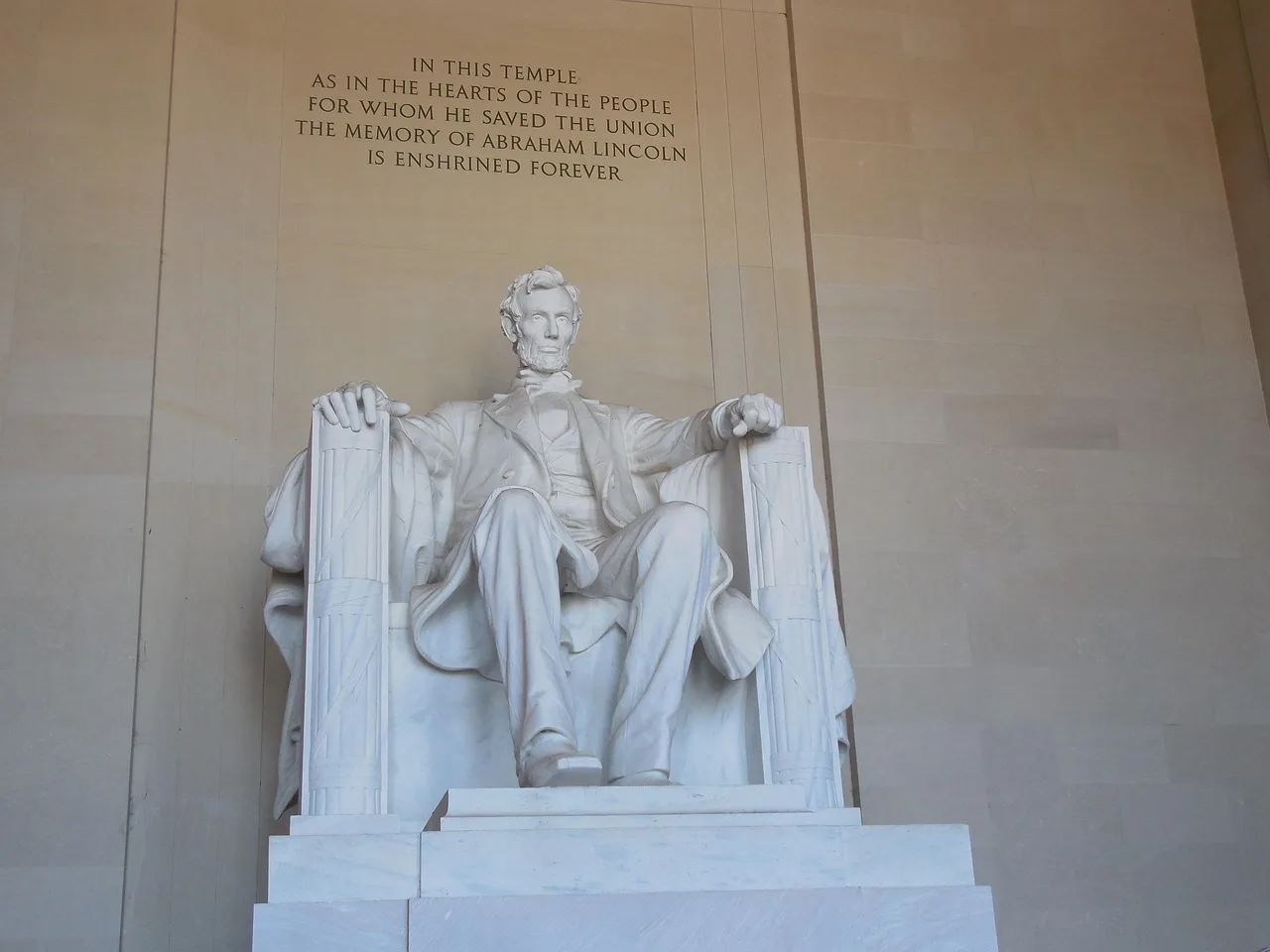
On November 19, 1863, Abraham Lincoln delivered the Gettysburg Address at the dedication of the Soldiers' National Cemetery in Gettysburg, Pennsylvania. Edward Everett spoke before Lincoln. Comparing their addresses restores the sequence of the ceremony and keeps Lincoln's remarks from being read as a standalone essay.
The setting was an outdoor cemetery dedication, not a legislative chamber. The text alone does not establish what each listener could hear or how the crowd responded; check contemporary accounts before making claims about either.
To find contemporary coverage, search the Library of Congress's Chronicling America for newspapers near Gettysburg dated November 18 and 20, 1863, and note which titles and issues are actually available. For the speech text, locate the Nicolay manuscript of the Gettysburg Address in the Library of Congress collection; use newspaper accounts as evidence of reception, not as interchangeable transcripts.
How anthologies quietly remove the context
Collections of great speeches strip occasion by design. The excerpt is chosen for being self-contained, given a one-line header, and printed next to an excerpt from a different century. Everything above: the room, the reply, the day before, the constraint: is gone, and nothing signals that it is gone.
That is not an argument against anthologies. It is an argument for treating an anthology as an edited artifact rather than as a source, and for going back to the holding institution when the occasion actually matters.
A catalog record in a research collection carries the thing an anthology never does: what the item is, who made it, and what event it is a record of. The same problem in the ceremonial genres is covered in award speeches, where the primary document is a broadcast rather than a text.
Five questions before you analyze anything
Five questions
- What was the occasion, and did the speaker choose to be there?
- What did the people in the room know that morning?
- Could they respond, and did they?
- Who else was this being transmitted to, and when?
- Which document am I actually readinga prepared text, a transcript, a press account, or an editor's selection?
Answer those and a speech that looked thin usually becomes legible. Skip them and you are reviewing a transcript, not examining a speech.
Related reading: political speeches for the wider ground, speech analysis for what to do with the occasion once you have it, and public domain speeches for whether the document you found may be reproduced at all.
Common questions
Which is more useful, the day-before or the day-after paper?
The day before, almost always. It tells you what the audience knew walking in, which is the fact an analysis needs and the one nobody looks up.
Are the applause markings in an official record reliable?
They are a convention of that chamber rather than a measurement. Read them as a note that something happened, not as evidence of how much of the room joined in.
What if the archive holds the papers but the drafts are missing?
Say so. A folder with correspondence and no drafts still fixes the occasion, the clearance chain and often the brief, which is most of what context work needs.
How do I use an anthology responsibly?
As a finding aid. Take the date, the occasion and the speaker from it, then go to a holding institution for the document, and never treat its excerpt boundaries as the shape of the speech.
Does the reply in a chamber count as context or as response?
Both, and it is unusually good evidence because it was made by people who were in the room and had to answer immediately.