
Rules
How to Fact Check a Canadian Throne Speech Without Partisan Spin
Canadian throne speech fact check: test Speech from the Throne claims against budgets, provincial data and Hansard, and see what happens when a claim fails.
What to take away
- A throne speech is read in the Senate Chamber by the Governor General, and it is a government statement, not a neutral report. Treat every number in it as a claim to be checked.
- The three sources that settle most disputes are the speech text itself, the federal budget or fiscal update, and provincial data for anything delivered in a province.
- If a government loses a confidence vote on the address, the convention is resignation or dissolution. That consequence is what makes the wording worth reading closely.
- Dates mattera claim can be true on delivery day and false three months later, so record the sitting date before you quote anything.
Where a throne speech sits in the parliamentary calendar
The Speech from the Throne opens a session. The Governor General reads it in the Senate Chamber in Ottawa, with MPs summoned to the bar of the Senate. The government writes it, so it sets out the ministry's agenda rather than reporting on the country.
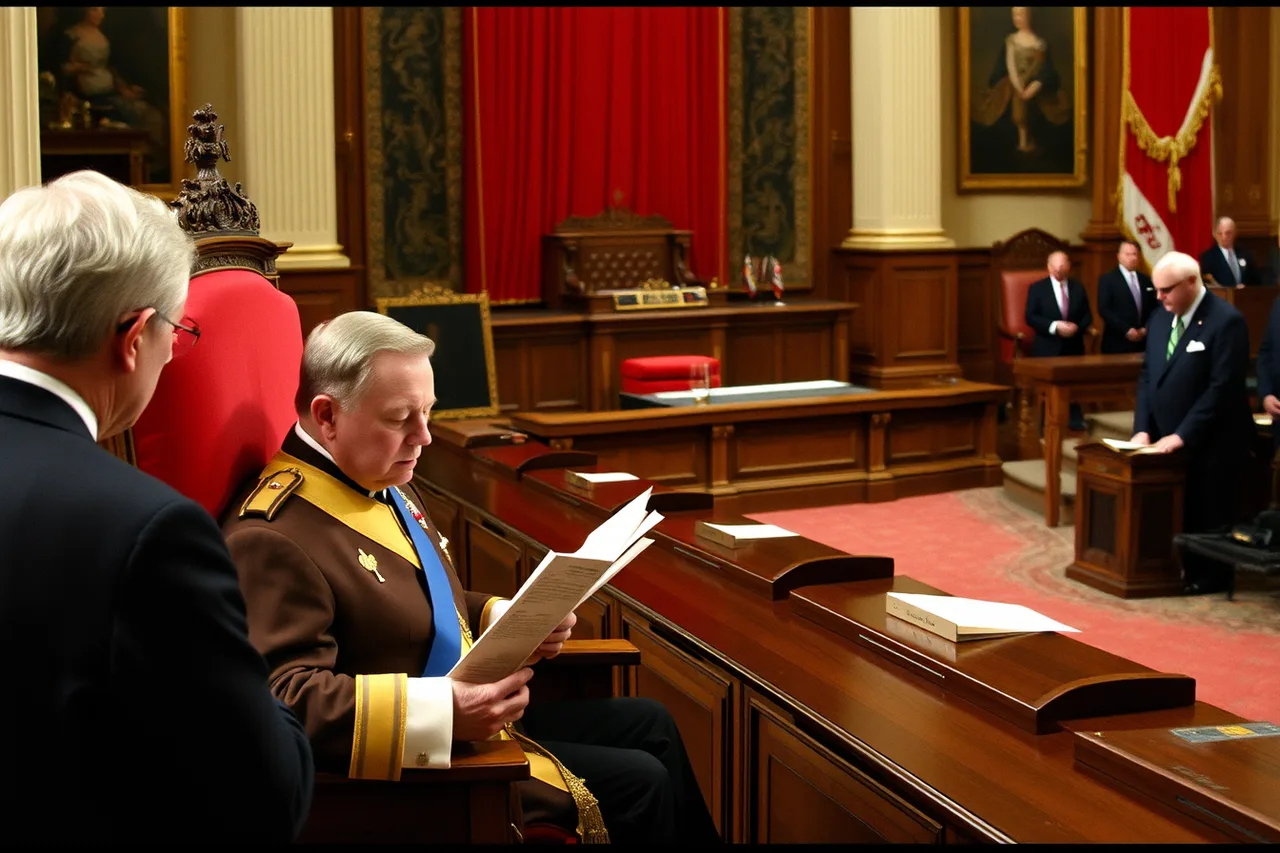
That distinction is the whole basis of a nonpartisan check. You are not asking whether the speech is fair. You are asking whether each stated commitment, figure or description can be traced to a document that exists.
The Government of Canada's own page on the Speech from the Throne describes the delivery and purpose, which is the right starting point before you touch any claim.
The five-step check
- Get the official text. Use the Hansard record or the Governor General's published transcript, not a news summary. Note the exact date and the session.
- Split the speech into claims. Mark each sentence that contains a number, a date, a legal change or a description of past performance.
- Match each claim to a primary document. Budgets, fiscal updates, Statistics Canada tables, provincial budgets, and the text of any bill already tabled.
- Record the gap in writing. Say what the speech states, what the document says, and whether the difference is a rounding, a timing shift or a contradiction.
- Set a recheck date. Commitments are often reworded in later budget documents, so a claim verified in one session may not hold in the next.
Example: checking a spending sentence
Suppose the speech says the government will expand a housing program. Do not argue about whether that is good. Find the line in the most recent federal budget, compare the dollar figure, then check whether the program is delivered federally or through a provincial agreement.
A worked comparison looks like this.
Checking a spending sentence
| Speech wording | Document to check | What settles it |
|---|---|---|
| "New funding" | Federal budget or fiscal update | Line item and fiscal year |
| "National program" | Provincial budget or bilateral agreement | Which level delivers and pays |
| "Since 2015" | Statistics Canada series | Base year and methodology |
| "Will introduce legislation" | LEGISinfo | Whether a bill has been tabled |
If the bill is not on LEGISinfo, the claim is a statement of intent, not a fact. Say so plainly.
A throne speech commitment is a promise with a date attached, and promises are checked against the calendar, not against the mood of the chamber.
Confidence votes and what follows a failed claim
The address is usually followed by a debate and a confidence vote. If the government loses, the convention is that it resigns or asks for dissolution. That is the concrete consequence that separates throne speech claims from ordinary rhetoric.
For a checker, the practical rule is narrower. A claim that cannot be matched to a tabled document or a published table should be labelled unverified, not false. Label it false only when a primary source contradicts it directly.
Readers who want to compare how different eras handled the same problem can work through 5 lessons worth learning about business speeches by decade, which shows how the same promises get rephrased across decades.
Checking provincial and regional claims
Many throne speech sentences describe things Canadians experience through provinces: health transfers, housing, infrastructure. Those need provincial documents. A federal announcement and a provincial budget can both be accurate and still describe different money.
Use the province's own budget page, its estimates, and the bilateral agreement text where one exists. Where a figure is a projection, say who projected it and for which year.
- Speech text saved with date and session
- Every number traced to a primary document
- Provincial claims matched to provincial sources
- Unverified claims labelled as unverified
- Recheck date set