Rules
How to check U.S. copyright status for famous speeches you want to publish
U.S. copyright law famous speeches questions turn on publication date, fixation, and authorship, with public domain lines, fair use factors, and checks to run.
What to take away
- U.S. copyright law famous speeches questions turn on three things: when the text or recording was first published, whether it was ever fixed in a tangible form, and who wrote it.
- Speeches published before 1929 are in the public domain in the United States, no renewal search required.
- Federal government works are uncopyrightable under 17 U.S. Code § 105, but state and local government speeches are not covered by that rule.
- Fair use is decided case by case through four statutory factors, not by a word count or a percentage.
- The Library of Congress and National Archives hold materials whose rights vary item by item, so a catalog record is a starting point, not a verdict.
- Always verify the specific text or recording you plan to publish, because a speech and its recording can have different copyright owners.
What U.S. copyright law says about speech texts and recordings
Copyright protects original expression fixed in a tangible medium. Three things decide whether you can publish a famous speech: when the text or recording was first published, whether it was ever fixed in a tangible form, and who wrote it. A speech becomes protected when someone writes it down or records it, not when it is delivered.
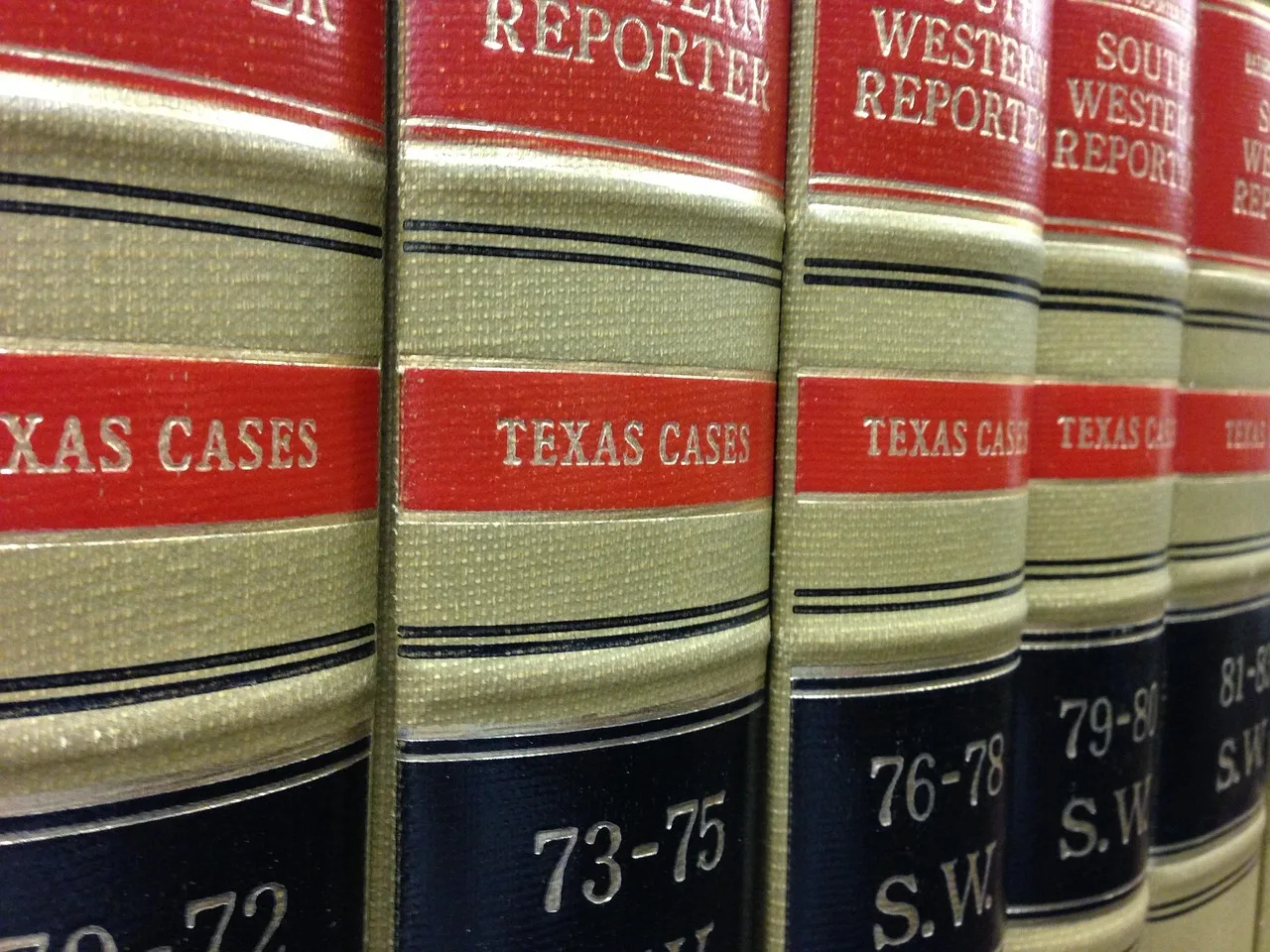
The Copyright Law of the United States is the statute that governs this. It defines what counts as a work of authorship, who owns it, how long protection lasts, and what uses are permitted without permission.
For a speech, that means three separate things can carry separate copyrights: the written text, the sound recording of the delivery, and any video broadcast of it. A single event can therefore involve multiple rights holders.
Consider a presidential address. The speechwriter may have drafted the text as a work made for hire. A network recorded the audio. A pool camera captured video. Each layer has its own status.
Fixation matters. An extemporaneous remark that nobody recorded and nobody transcribed is not protected, because there is no copy. Once a stenographer or a microphone captures it, protection attaches.
Originality matters too. Short phrases, slogans, and commonplace expressions are not copyrightable on their own. The Compendium of U.S. Copyright Office Practices sets out how the Office evaluates originality and registrability for works that include spoken content.
The statutory basis for what speech texts and recordings are protected, and for how long, sits in Chapter 1 of Title 17. Section 102 lists the categories of protected works. Section 106 lists the exclusive rights. Sections 107 through 122 set the limits, including fair use.
Registration is not required for protection, but it matters for enforcement. A work must be registered before the owner can sue for infringement in federal court, and timely registration affects the availability of statutory damages.
Term length depends on when and how the work was first published. Works published before 1929 have expired. Works published from 1929 through 1977 follow rules that depend on renewal and on whether copyright notices appeared. Works created from 1978 onward generally last for the life of the author plus seventy years.
Corporate and anonymous works follow a different clock, usually ninety-five years from publication or one hundred twenty years from creation, whichever ends first.
Sound recordings have their own history. Federal copyright did not cover sound recordings until 1972, though many states protected them earlier under common law and statute. Pre-1972 recordings are governed by a patchwork that is still being litigated.
Public domain rules for famous speeches before 1929
Any work published in the United States before 1929 is in the public domain today. That is the cleanest line in American copyright, and it covers a large share of the canon.
The Lincoln-Douglas debates, the Gettysburg Address as published in 1863 newspapers, and Susan B. Anthony's 1873 suffrage address all fall on the free side of that line. So do most nineteenth-century oratory texts.
The line moves forward every January 1. Each new year, another cohort of works enters the public domain in the United States, which is why the exact date of first publication matters so much.
Publication is not the same as delivery. A speech delivered in 1925 but first printed in a 1930 anthology is treated under the later date for the printed version, even though the delivered words were older.
Unpublished works follow a separate rule. Works created but never published before 1978 have a term tied to the author's death, and older unpublished works were brought into the public domain on a fixed schedule that has largely run its course.
A useful starting point for locating free texts is our guide to the best civil rights speeches, and where to find them. It maps the major repositories and the traps in each.
The biggest trap is treating an archive listing as proof of status. A digitized speech on a university site or a historical society page tells you where a copy lives, not who owns it. Public domain status is not settled by an archive listing alone.
Another trap is the renewal record. For works published from 1929 through 1963, copyright had to be renewed to survive its first term. Many speech texts were never renewed, which places them in the public domain even though they are newer than 1929.
Renewal research is tedious but doable.
If a renewal cannot be found for a 1929 through 1963 publication after a reasonable search, most publishers treat the work as public domain. Document your search so you can defend the decision.
Works published from 1964 through 1977 are a different story. Renewal became automatic, so the absence of a renewal record proves nothing. Assume protection unless the work was published without a copyright notice and without later registration.
Foreign works add another layer. Under restored copyright provisions, some works that had fallen into the public domain in the United States because of formalities were brought back into protection. A speech by a foreign author first published abroad can be affected.
For researchers working on nineteenth-century and early twentieth-century material, the practical advice is simple. Confirm the first publication date, confirm U.S. publication, then confirm that no restoration applies.
Fair use and the four factors for quoting speeches
Fair use is the main path for quoting a speech that is still under copyright. It is a defense, not a permission slip, and it is decided on the facts of each use.
The four factors come from Section 107 of Title 17. They are the purpose and character of the use, the nature of the copyrighted work, the amount and substantiality of the portion used, and the effect on the potential market for the work.
The Fair Use Index collects court opinions that apply these factors, organized by category and by court. It is the fastest way to see how judges have treated quotation and excerpting in practice.
Factor one favors uses that are transformative: commentary, criticism, teaching, scholarship, and news reporting. Quoting a speech to analyze its rhetoric is stronger than reprinting it to let readers enjoy it.
They are not the deciding factor, though nonprofit and educational environments do help. A commercial publisher with a genuinely transformative use can win. A classroom with a wholesale reproduction can lose.
Factor two looks at the work itself. Published, factual, and informational works get less protection than unpublished, creative ones. A speech text is usually published and often factual, which tilts slightly toward fair use.
Unpublished speeches are the hard case. Courts have given strong weight to an author's right to control first publication, so quoting extensively from a manuscript speech that was never published is risky even for scholarly purposes.
Factor three is about amount and substantiality. There is no safe word count. Quoting the single most memorable line of a short speech can be the heart of the work even if it is a tiny fraction of the total.
Factor four asks whether your use substitutes for a market the owner actually has or might develop. Reprinting a full speech in a collection that competes with a licensed anthology is the clearest failure.
A common mistake is treating attribution as a substitute for permission. Crediting the speaker and the source is good practice and sometimes required by other rules, but it does not make an infringing use lawful.
Another mistake is assuming that a famous speech is fair game because it is famous. Fame cuts the other way: well-known speeches often have active rights holders, including estates and foundations that license them.
The estates matter in practice. The King Center, the Miller Center of Public Affairs, and similar institutions hold or administer materials, and their permissions pages describe what they will and will not allow.
When fair use is uncertain, three options remain: quote less, license the material, or use a public domain alternative. Our notes on civil rights speeches misquotes explain why the version you are quoting may not even match the delivered text.
If you plan to publish a short excerpt, keep a written record of your reasoning on all four factors. If a claim ever arrives, that record is your evidence of good faith.
How the Library of Congress and National Archives handle rights
The Library of Congress is the largest library in the world and a major holder of speech recordings and manuscripts. Its collections include the National Jukebox, American Memory, and the recorded sound collections.
The Library does not own copyright in most of what it holds. Its rights statements typically say that the Library cannot grant or deny permission to publish, and that the user must assess the status independently.
The Library holds copies, often acquired by deposit, gift, or transfer, and copyright in those copies usually stayed with the creators or their heirs.
The National Archives and Records Administration holds federal records, including presidential libraries and audiovisual materials. Its catalog records carry rights statements that range from unrestricted to unknown.
A National Archives record marked public domain usually means the item was produced by federal employees as part of official duties. That is the Section 105 rule in action, and it is the strongest status you can find.
But records transferred to the Archives from other sources are not automatically federal works. A donated collection of a senator's speeches may still be under copyright held by the donor or the estate.
Both institutions distinguish between the physical item and the intellectual content. Owning a tape or a manuscript does not transfer copyright. Only a written assignment from the rights holder does that.
For researchers, the practical move is to read the rights statement on the specific item record, not the collection-level page. Rights often vary within a single collection.
When a record says restrictions are unknown, treat the item as protected until you can establish otherwise. Document the search, and consider a permissions request if the use is central to your project.
Other institutions follow similar patterns. The Smithsonian Institution, the National Park Service, and C-SPAN all publish rights guidance for their holdings, and each draws the line differently.
C-SPAN's position is unusual: it generally permits noncommercial use of its video of federal proceedings, but its own produced programming carries different terms. Read the specific policy before you republish.
Government works and 17 U.S. Code § 105
Section 105 of Title 17 states that copyright protection is not available for any work of the United States Government. That single sentence frees a large body of speech material.
17 U.S. Code § 105 covers work prepared by an officer or employee of the federal government as part of that person's official duties. The key words are officer or employee, and official duties.
A speech written by a federal employee on the job is not protected. That includes many presidential remarks, agency statements, congressional floor speeches transcribed by the Government Publishing Office, and federal reports.
It does not include work by federal contractors, grantees, or volunteers. A speechwriter hired as an independent contractor is not a government employee, so the contractor may hold the copyright.
It does not cover state, county, or municipal government works either. A governor's address, a state legislator's floor speech, or a city council statement can be fully protected, and many states assert copyright in their publications.
There is an exception worth knowing. The federal government can hold copyrights transferred to it by assignment, and it can receive exclusive rights in some circumstances. Those are rare but real.
Standard reference works and some federally commissioned publications also fall outside the rule when produced by private entities under contract.
When you are working with federal material, the safest approach is to identify the author's employment status at the time of creation. If the person was a federal employee acting in scope, the work is free.
If the status is unclear, check the originating agency's rights guidance. Many agencies publish blanket statements about the copyright status of their own materials.
For a deeper look at how these rules play out across a body of work, our civil rights speeches context piece collects the recurring questions and the answers that hold up.
Copyright status of specific speeches: a table of examples
The table below is a starting point, not legal advice. Each entry assumes the text as first published and does not cover later recordings or broadcasts.
Copyright status of specific speeches
| Speech | Approximate date | Text status | Notes |
|---|---|---|---|
| Gettysburg Address | 1863 | Public domain | Published in newspapers during the author's life |
| Lincoln's Second Inaugural | 1865 | Public domain | Same basis |
| Susan B. Anthony, suffrage address | 1873 | Public domain | Published in the nineteenth century |
| Franklin D. Roosevelt, first inaugural | 1933 | Public domain | Published without renewal |
| John F. Kennedy, inaugural address | 1961 | Public domain | Published without renewal |
| Martin Luther King Jr., "I Have a Dream" | 1963 | Protected | Registered and renewed; estate holds rights |
| Ronald Reagan, "Tear Down This Wall" | 1987 | Protected | Federal employee text; broadcast footage separately owned |
| Barack Obama, 2004 convention keynote | 2004 | Protected | Campaign speech, not a government work |
The 1933 and 1961 entries reflect the renewal rule described above. Both texts were published in the relevant period, and no renewal is on record for the speech text itself.
The King speech is the standard cautionary example. The text and the delivery are protected, the estate has enforced its rights, and a widely circulated licensing dispute over a documentary film confirmed that the speech is not public domain.
Reagan's 1987 Berlin speech is a good illustration of the split. The text was produced in the White House as official work, but the memorable video belongs to the news organizations that recorded it.
Obama's 2004 keynote is a campaign speech, not a government work. Campaign materials are produced by political organizations, not federal employees acting in official duties, so Section 105 does not apply.
When you build your own table for a project, include four columns: the speech, the date of first publication, the author's employment status, and the location of any recording. That structure forces the right questions.
For texts that are clearly free, our collection of best business speeches is a practical place to start building a syllabus or an anthology.
How to check the copyright status of a speech you want to publish
Work through these steps in order. Each one can end the inquiry, and skipping ahead is how errors happen.
How to check the copyright status
- Identify the exact item you want to publishthe text, the audio, the video, or a combination. Text and recording can have different owners, so treat each as a separate work.
- Establish the date and place of first publication. A date alone is not enough. U.S. publication matters for the pre-1929 rule, the renewal rule, and the 1978 term rules.
- Check whether the work was restored to copyright. Foreign works first published abroad can be affected by restored copyright provisions, which brought some works back into protection.
- For works published from 1929 through 1963, search renewal records in the Catalog of Copyright Entries, Copyright Office records, Internet Archive, and HathiTrust. Document what you find and what you do not. For works published from 1964 onward, assume protection unless an exception applies.
- If the work is protected, run the four fair use factors against your specific planned use and write down your reasoning. If fair use is weak, seek permission from the current rights holder.
Two habits prevent most problems. First, keep a dated file for every speech you evaluate, including screenshots of catalog records and renewal searches. Second, revisit the file if your planned use changes, because fair use analysis is tied to the use, not the work.
If you are building a larger project, our guide to public domain speeches context covers how these rules interact when you are assembling many speeches into one publication.