Industry
Part of Public domain status is not settled by an archive listing alone
5 takeaways on public domain speeches context
Public domain speeches are easy to obtain and hard to read. How to recover what the first audience knew, and the editorial layers sitting on the text.
Even when a speech's original text is in the public domain, its first audience knew things the modern reader does not. The text may survive while its occasion does not, which reverses the problem with recent material. A public-domain speech can be easy to obtain and hard to read. This is the challenge of public domain speeches context: recovering what the first audience already knew.
This page is about supplying the missing half. It reproduces no passages and attributes no line.
What to take away
- For older speeches, comprehension—not access—is often the constraint: references have disappeared.
- The text you have has an editorial historysomebody chose a copy, corrected it, and punctuated it.
- Reconstructing what the audience already knew is the single most productive piece of work available on this material.
- Venue and proceeding matterthey shaped what the audience could hear and the order in which speakers spoke.
- Public-domain status applies to a particular text, not automatically to every edition or recording; check the specific version.
What the first audience brought with them
An audience arrives already holding things a speaker does not have to say. Working out what those were is most of the interpretive task.
- The news of the week.Speeches respond to events readers of the time did not need told. Local and national papers from the days before the occasion recover this faster than any secondary account. A research guide such as the Library of Congress introduction to historic newspapers shows how to search by date and place, which is the query this work needs.
- The shared texts.Scripture, school readers, popular poetry and earlier famous speeches supplied a common stock of phrasing. An allusion invisible to a modern reader was obvious in the room.
- The physical setting.Outdoors or indoors, seated or standing, with or without amplification. The address had to be audible without help, which shaped sentence length before anything else did.
- The procedure.Many older speeches sat inside a formal proceeding with its own rules about who spoke, for how long, and in what order.
- The publication expectation.A speaker who knew the text would be printed in full the next morning wrote differently from one addressing only the people present.
Abraham Lincoln's Gettysburg Address gives a concrete case: it was delivered at the dedication of Soldiers' National Cemetery. To investigate what its first audience knew, check whether a program for that dedication survives, read contemporaneous local newspaper accounts, and compare them with Gettysburg National Military Park's history and culture pages.
The document has a history too
The version in front of you was produced by somebody. For older material that person is usually invisible and their decisions are substantial.
| Editorial layer | What it changed |
|---|---|
| The reporter's method | Whether the text came from shorthand, from a supplied copy, or from memory |
| The newspaper's house style | Punctuation, paragraphing, and the silent correction of grammar |
| The later compiler | Which of several newspaper versions was chosen as the base |
| The school edition | Cuts for length and for suitability, rarely marked |
| The monument or plaque | An extract, sometimes altered to fit the stone |
| The modern digital edition | Transcription choices, expansion of abbreviations, normalization of spelling |
A published transcription that states its editorial decisions is doing the reader a service. The National Archives transcription of the United States Constitution is a useful example of the convention. That page says what it is a transcription of and how the text has been treated, which is exactly the note most speech texts lack.
Reconstructing an occasion
- Fix the date, the place and the proceeding the speech sat inside.
- Read two newspapers from the week before, from the same region if possible.
- Establish who was in the room and why, from a program, a minute book or a report.
- Establish how the text reached printshorthand, supplied copy, or later compilation.
- Identify the allusions you cannot place, and treat each as a research question rather than as decoration.
- Note the acoustic conditions. Outdoor speaking to a large crowd before amplification is a physical constraint with visible consequences in the sentences.
Step four decides how much weight any wording can carry. A text taken down in shorthand by a skilled reporter is close to what was said; a text reconstructed from notes is a summary in the reporter's voice. The full set of status and provenance questions is in public domain speeches.
Places where context survives unusually well
Sites of famous nineteenth-century speaking are often run by heritage bodies that publish the surrounding history. They record who organized the event, how many attended, the program, and the weather.
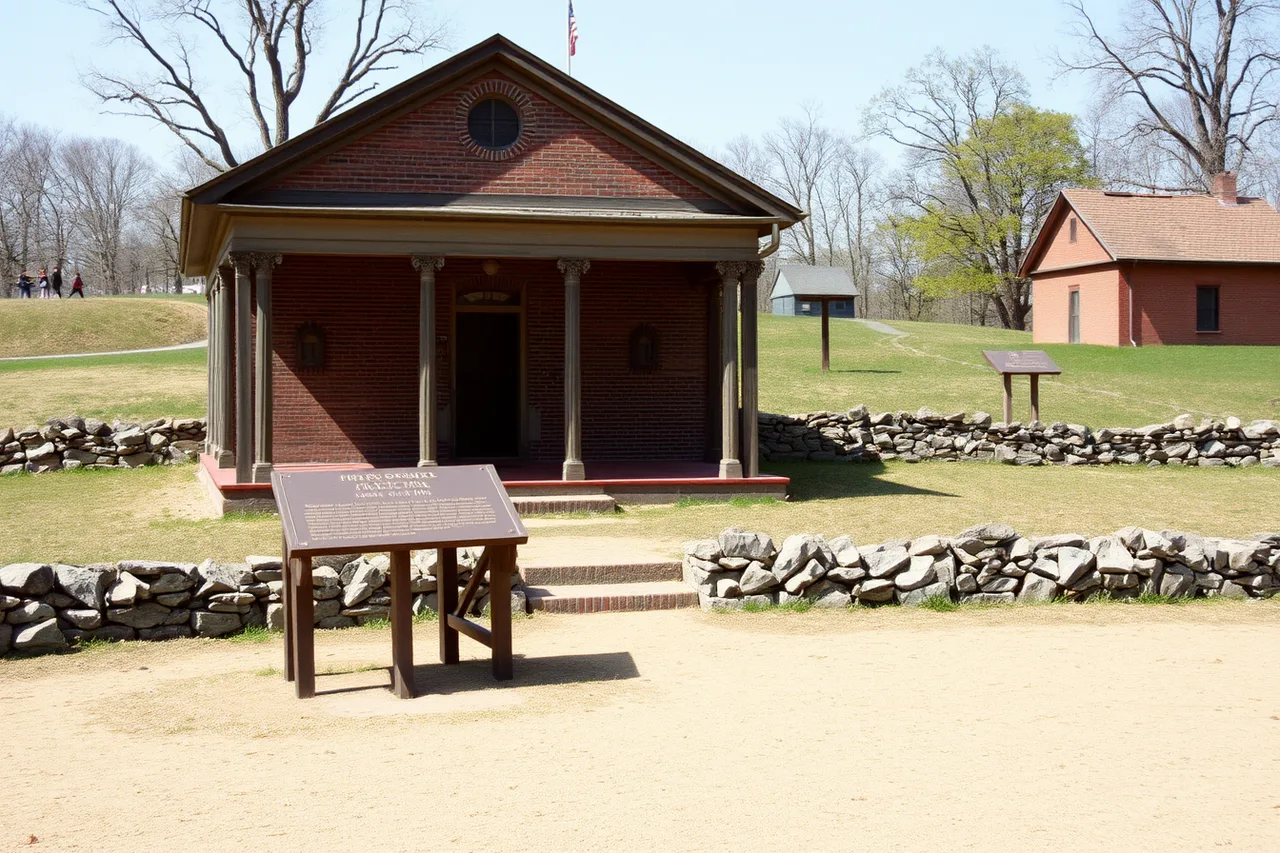
Gettysburg National Military Park's history and culture pages are that kind of source. They answer occasion questions no anthology addresses.
Institutional minute books are the other rich seam. Societies, councils and churches recorded who spoke and what was resolved, and the resolution often tells you what the speech was for.
Using older material well
The freedom to reprint a public-domain text is a real advantage, and it creates a temptation: to quote at length instead of explaining. A long block of nineteenth-century prose in a modern article is usually there because the writer did not want to do the work of paraphrase. But age alone does not establish a text's status. The U.S. Copyright Office explains that copyright terms depend on details such as authorship and publication history. The original text of Abraham Lincoln's Gettysburg Address is in the public domain; a modern edition or recording may have separate rights, so check the specific version.
The better use of the freedom is comparison. Set two versions of the same speech side by side and the editorial history becomes visible. That is a study no rights holder can obstruct, and the methods in speech analysis are built for it.
Older material is also the only place where the structural devices can be examined at full length without a permissions question. That is why rhetorical devices draws on it, and why the political speeches overview treats version history as the first question about any text.
Common questions
How do I know which printed version to work from?
Prefer the earliest full text with a stated method, usually a same-week newspaper that says how it was taken down. Note the others and record where they differ.
Is a modern scholarly edition better than the original printing?
For reading, usually yes, because it explains its choices. For evidence about wording, the earliest witness matters more, and a good edition will tell you what that is.
What if the speech survives only in a summary?
Then you have a summary, and you should say so. A great deal of older speaking survives only as an account of what was said, which supports description and not quotation.
Does public domain status apply to a recording of an old speech?
Not automatically. The U.S. Copyright Office explains that copyright status and term depend on the particular work and its history. A later recording, performance or reading may have its own copyright even when the historic speech text is public domain. Check the recording itself rather than assuming the speech's status carries over.