Industry
Part of Why commencement speeches face the worst listening conditions
5 things worth knowing about commencement speeches by decade
Commencement speeches by decade track who got invited, not who graduated. Five facts, from Emerson in 1837 to the viral addresses of the 2010s.
What to take away
- Commencement speeches by decade differ first in what record survives, and that difference is bigger than any change in rhetoric.
- The single most useful rulegroup years by artifact type before comparing them across decades.
- The run of addresses across a century tracks invitation policy as much as rhetoric.
- Ralph Waldo Emerson's 1837 Harvard address survives as a printed text he revised; the 2010s addresses survive as video.
- Honorary degrees are a separate transaction from the invitation, and the citation is written by the institution.
- Student newspapers are the only witness for most ceremonies before roughly 1970, and they paraphrase.
- Named nineteenth- and mid-century anchorsEmerson at Harvard (1837), Franklin D. Roosevelt at Oglethorpe (1932), Winston Churchill at Harvard (1943), George C. Marshall at Harvard (1947), John F. Kennedy at American University (1963).
- Named late-century and recent anchorsLyndon B. Johnson at Michigan (1964), Alexander Solzhenitsyn at Harvard (1978), Steve Jobs at Stanford (2005), J.K. Rowling at Harvard (2008), Chimamanda Ngozi Adichie at Wellesley (2015).
- Recent viral examplesBarack Obama at Barnard in 2012 and Chadwick Boseman at Howard in 2018 were posted as video and text within days.
1. 1837 to 1900: the printed text is a revised version
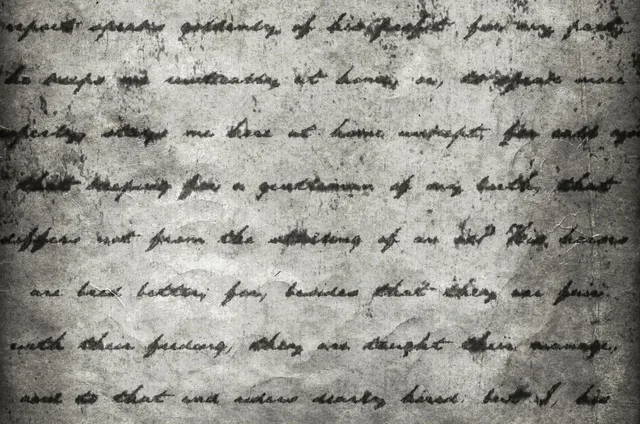
Emerson addressed Harvard's Phi Beta Kappa society on August 31, 1837. What circulates today as "The American Scholar" is a text he edited afterward for print, not a transcript of the room. That gap between delivery and publication is the norm for the nineteenth century, not the exception.
Nineteenth-century addresses often reached print as a pamphlet the speaker paid for, or as an extract in the institution's annual report. Booker T. Washington's September 18, 1895 address at the Atlanta Exposition is often filed with commencement speeches, but it was a fair address, not a graduation.
By the 2010s the order reverses. A speaker at a large university knows the address will be clipped, posted and watched by people who were never in the hall.
David Foster Wallace's 2005 Kenyon commencement address became famous only after his death, when the text and audio circulated online. Delivery and publication had separated again, in the other direction.
Commencement speeches collected across a century mix these two conditions in one list.
2. 1900 to 1949: the honorary degree and its citation
An address paired with an honorary degree is constrained by a citation the institution writes and reads aloud before the speaker stands up. The citation sets the frame. It is also the institution's own document about what it wanted that year.
Franklin D. Roosevelt used his May 22, 1932 address at Oglethorpe University to call for "bold, persistent experimentation." George C. Marshall's June 5, 1947 Harvard address, delivered as he received an honorary degree, outlined the European Recovery Program. Winston Churchill received an honorary degree at Harvard on September 6, 1943 and spoke at the ceremony.
Not every invitation carries a degree, and not every degree carries an address. Tracking the two columns separately is one of the cheapest corrections you can make to a speaker list.
A contested degree, as at Brandeis in 1953 when the university withdrew an invitation under pressure, tells you more about the institution than the speech does.
3. 1950 to 1969: student papers carry the record
A student newspaper summary is usually the only pre-1970 account that survives. Those summaries paraphrase, compress, and quote the line that fit the headline. They are evidence that something was said, not evidence of wording.
John F. Kennedy's June 10, 1963 address at American University and Lyndon B. Johnson's May 22, 1964 address at the University of Michigan are commencement speeches with full national transcripts. That is why they survive better than most ceremonies of the 1960s.
The 1960s campus addresses are the hardest decade for this. Ceremonies were disrupted, speakers were disinvited, and the official record is thin.
4. 1970s and 1980s: recording and publication become routine
Three things happened close together at most institutions: the ceremony was recorded as routine, the recording was made public, and the text was posted alongside it. C-SPAN's archive starts carrying commencement coverage in the 1980s, which gives you a dated video record for that decade forward.
Alexander Solzhenitsyn's June 8, 1978 Harvard address survives as a published text with later audio. Ronald Reagan's May 17, 1981 Notre Dame commencement sits on the early edge of the video shift.
When the record becomes public
- 1830s-1900Printed text, revised by speaker
- 1900-1970Program and student paper summary
- 1970s-1980sRecording made routine and public
- 1980sC-SPAN archive carries coverage
- 2000s-presentVideo, text, clips, transcripts
Before the break, you are reading an extract chosen by the institution for its annual report or fundraising letter. That is a real document about the institution and a poor sample of the speech.
The commencement speech entry gives a general account of the form and of how recent its public profile is.
5. 1990s to 2010s: addresses written for the clip
Steve Jobs at Stanford on June 12, 2005, J.K. Rowling at Harvard on June 5, 2008, and Chimamanda Ngozi Adichie at Wellesley in 2015 all circulate primarily as short video segments. The full text exists, but most readers meet the excerpt first.
Barack Obama's May 14, 2012 Barnard address and Chadwick Boseman's May 12, 2018 Howard address were both posted as video and text within days.
The "Wear Sunscreen" text that many readers still call a Kurt Vonnegut commencement speech is a June 1, 1997 Chicago Tribune column by Mary Schmich.
What survives by decade
1830s-1900
- Survives
- Printed text
- Ask of it
- Theme, structure
- Wording
- Speaker's final
1900-1970
- Survives
- Student summary
- Ask of it
- Occasion, framing
- Wording
- Reported only
1970-2000
- Survives
- Recording, video
- Ask of it
- Delivery, response
- Wording
- Full text
2000-present
- Survives
- Video, clips, text
- Ask of it
- Everything, edits
- Wording
- Edited text
A clip is a different artifact from the 1837 printed text and from the 1960s student summary.
1990s to 2010s: addresses written for the clip
What usually survives
- 1830s to 1900 (Emerson at Harvard, 1837)
- Printed text, often revised by the speaker
- 1900 to 1970 (Roosevelt at Oglethorpe, 1932; Johnson at Michigan, 1964)
- Program, student paper summary, occasional extract
- 1970 to 2000 (Solzhenitsyn at Harvard, 1978)
- Recording, sometimes published video and text
- 2000 to present (Jobs at Stanford, 2005; Adichie at Wellesley, 2015)
- Video, text, clips, transcripts
What you can ask of it
- 1830s to 1900 (Emerson at Harvard, 1837)
- Theme, structure, the speaker's own final wording
- 1900 to 1970 (Roosevelt at Oglethorpe, 1932; Johnson at Michigan, 1964)
- Occasion, institution's framing, reported theme
- 1970 to 2000 (Solzhenitsyn at Harvard, 1978)
- Delivery, length, audience response, full text
- 2000 to present (Jobs at Stanford, 2005; Adichie at Wellesley, 2015)
- Everything, including how the text was edited
For how to read a full text once you have one, see speech analysis.
Common questions
Is there a standard length for a commencement address?
No, and the figure changes by institution and by decade. At many ceremonies the slot runs about 10 to 20 minutes, which is a typical range and not a rule. Ask the ceremony office rather than assuming a number you read elsewhere. Older printed texts are often shorter than the delivered address because the speaker cut for print.
Why do nineteenth-century addresses read as more formal?
Partly they were, and partly you are reading a text the speaker revised for publication. Emerson's 1837 address was edited after the fact. Separate the delivered version from the printed one before drawing conclusions about tone.
Can I compare two institutions' series?
Only after matching them on what survives and on who chose the speakers. A faculty committee and a president acting alone produce different rosters. Two institutions with different selection processes are running different experiments.
What if the archive holds a recording but will not release it?
Ask for reading-room access, which is often granted where publication is not. An account written from a listening session, cited to the archive and the date, is legitimate evidence. The same caution applies to award speeches and to cultural speeches, where publication practice decided what survived.
Whether a text can be reprinted depends on its copyright status, and public domain speeches sets out what is free to reuse.