Guides
Canadian Remembrance Day Speeches Worth Reading Twice
Five Canadian Remembrance Day speeches, from John McCrae's 1915 poem to the 2024 Silver Cross Mother, each with the source where the text can be checked.
What to take away
- The Canadian Remembrance Day speeches worth a second read are dated and attributable.
- Named texts worth a second read include Laurence Binyon's 'For the Fallen' (1914) and John McCrae's 'In Flanders Fields' (1915). Both are read at Canadian ceremonies.
- The spoken addresses to check are William Lyon Mackenzie King's 9 December 1941 broadcast, Mary McLeod's 2024 Silver Cross Mother remarks, Julie Payette's 2018 address, and Mary Simon's 2021 address.
- The Act of Remembrance is not a speech. It is a fixed recitation from Laurence Binyon's 'For the Fallen,' and it is the same words at every cenotaph in the country.
- Veterans Affairs Canada publishes the ceremony order and suggested readings, so a transcript can be checked against the format it was written for.
- The Governor General's office posts viceregal addresses. Older ones are often missing, so a newspaper page may be the only surviving text.
- Read each speech once for what it says and once for the slot it fills. The second reading is where the craft shows.
The Act of Remembrance: Laurence Binyon's 'For the Fallen,' 1914
Before any named speaker stands up, the ceremony recites the Act of Remembrance. It is the fourth stanza of 'For the Fallen,' written by Laurence Binyon and published in The Times on 21 September 1914, weeks after the First World War began.
'They shall grow not old, as we that are left grow old.' That line is the reason the stanza outlived the poem around it. Binyon wrote it at his desk in the British Museum, not at the front. The distance shows in the even meter.
Every legion branch, every provincial cenotaph and the national ceremony at the National War Memorial in Ottawa uses the same words. It is the one Canadian Remembrance Day text with no variation to check. If a program quotes it differently, the program is wrong.
John McCrae's 'In Flanders Fields,' 1915
John McCrae was a Canadian artillery officer and physician from Guelph, Ontario. He wrote the poem in May 1915 after the Second Battle of Ypres, where a close friend, Alexis Helmer, was killed. The story that he wrote it in twenty minutes and threw it away is reported, not documented.
The poem was published anonymously in Punch on 8 December 1915. McCrae died of pneumonia in January 1918, so the text has been in the public domain for decades. Reprints often carry altered punctuation because the poem's fame invites copying. The version held by Library and Archives Canada is the one to cite.
'Take up our quarrel with the foe' is the line that makes the poem contested. Some readers hear a call to arms; others hear a dying man's shorthand for duty. Read it twice and the argument does not resolve, which is why it still gets quoted in the House of Commons.
William Lyon Mackenzie King's broadcast, 9 December 1941
On 9 December 1941, two days after the attack on Pearl Harbor, Prime Minister William Lyon Mackenzie King broadcast to the nation. Canada had been at war since September 1939, but the American entry changed the room.
The broadcast is worth reading as a Remembrance Day text because it shows the wartime register that later viceregal addresses inherited. It names the dead plainly, avoids triumphalism, and treats the audience as mourners rather than a cheering crowd.
The full text is in the Canadian Parliamentary Hansard and in the King papers at Library and Archives Canada. Both are dated, which matters. Undated reprints of wartime broadcasts circulate widely and often smooth out the language.
Mary McLeod, the 2024 Silver Cross Mother
The Royal Canadian Legion names a Silver Cross Mother each year from among mothers who have lost a child in military service. She lays a wreath at the national ceremony on behalf of all Canadian mothers who have lost a child.
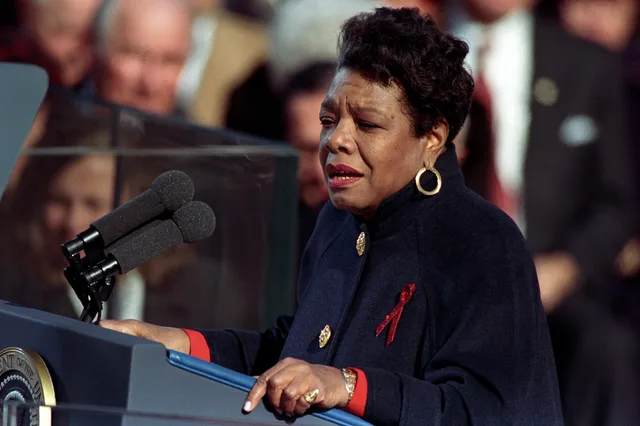
Mary McLeod of Comox, British Columbia, was the 2024 Silver Cross Mother. Her son, Corporal James McLeod, was killed in Afghanistan in 2009. Her remarks were short, under three minutes, and delivered without political framing.
The Silver Cross Mother's speech is the one that breaks the pattern. The speaker holds no office and has no rhetorical training, so the effect rests on presence rather than phrasing. Compare it against the Governor General's address from the same year and the difference in register is immediate.
Governor General addresses: Julie Payette in 2018 and Mary Simon in 2021
The Governor General speaks as a non-partisan office holder, which limits what the address can do. It names the dead, thanks those who served, and closes on remembrance. Policy argument would break the format.
Recent addresses are posted on the viceregal website. Older ones are uneven. The 2018 address by Julie Payette and the 2021 address by Mary Simon are both archived and both run under five minutes.
Payette, a former astronaut, delivered the 2018 address at the National War Memorial. Simon, the first Indigenous governor general, gave the 2021 address there. Both texts are on the Governor General's website.
Where a year is missing from the official site, a newspaper page from the following day is often the only surviving text.
How to check a Canadian Remembrance Day speech before you cite it
A prepared script and a delivered speech are different documents. If a text was never checked against the delivery, say so when you cite it.
- Confirm the year, the venue and the speaker's title at the time of delivery.
- Confirm whether the text is a transcript, a prepared script or a reported version.
- Note the ceremony location and the presiding official.
- Check whether the speech was delivered in one language or two.
Veterans Affairs Canada publishes a guide to Remembrance Day that sets out the ceremony's elements and offers readings. It is the fastest way to see whether a text fits the format it claims to come from.
For the texts named above, start with Library and Archives Canada for McCrae and King. The Hansard carries the 1941 broadcast. The Royal Canadian Legion holds Silver Cross Mother material. The Governor General's website archives Payette and Simon.
A prepared script and a delivered speech are different documents. If a text was never checked against the delivery, say so when you cite it.
Example: reading Mary McLeod's 2024 remarks twice
Take the 2024 Silver Cross Mother's remarks and read them once for content. Note the opening, the naming of her son, and the closing appeal.
Then read them again with the ceremony in mind. Ask what the two minutes of silence just before did, and what the wreath laying just after will do. The speech is a hinge between two silent acts, not a self-contained argument.
That second reading is what separates a ceremonial text from a political one. The commencement speeches by decade collection shows the same pattern: occasion shapes wording more than the speaker does.
Where Canadian Remembrance Day speech texts live
No single archive holds Canadian Remembrance Day speeches. The Governor General's office posts viceregal addresses, though older years are sometimes missing. Veterans Affairs Canada carries the Act of Remembrance and suggested readings.
Library and Archives Canada holds the McCrae papers and the King papers. The Canadian Parliamentary Hansard carries wartime broadcasts and House of Commons tributes. Local newspaper archives are often the only source for legion branch addresses, which are rarely published by the branches themselves.
For a broader historical frame, the Remembrance Day overview covers how observances developed across Commonwealth countries.
Ottawa national ceremony
- Presiding official
- Governor General
- Silver Cross Mother
- National representative
- Length of speeches
- 3 to 5 minutes each
- Languages
- English and French
- Wreath laying
- National organizations
Typical municipal ceremony
- Presiding official
- Legion branch president or mayor
- Silver Cross Mother
- Sometimes none
- Length of speeches
- 1 to 3 minutes
- Languages
- Varies by province
- Wreath laying
- Local organizations
Common questions
Are Canadian Remembrance Day speeches archived in one place?
No. The Governor General's office, Veterans Affairs Canada, Library and Archives Canada and local newspapers each hold different pieces. Any complete list has to be assembled from several sources, and some years survive only as a newspaper page.
How long is the Silver Cross Mother's speech?
Most run under three minutes. The role is ceremonial and the length reflects the format rather than a written rule. Mary McLeod's 2024 remarks fit that pattern.
Is Remembrance Day a statutory holiday across Canada?
No. It is a holiday in most provinces, but Ontario, Quebec and Manitoba treat it differently. Provincial government pages carry the current position, and the rules change.
Why do these speeches avoid politics?
The ceremony is built around mourning and remembrance, and the Governor General speaks as a non-partisan office holder. Policy argument would break the format, which is why the texts read as restrained even when the subject is a war the speaker's government is running.
Which Canadian Remembrance Day speeches are easiest to check?
The 1915 poem and 1941 broadcast sit in Library and Archives Canada and Hansard. The 2018 and 2021 Governor General addresses are on the viceregal website. The 2024 Silver Cross Mother remarks are in the Royal Canadian Legion's national ceremony material.